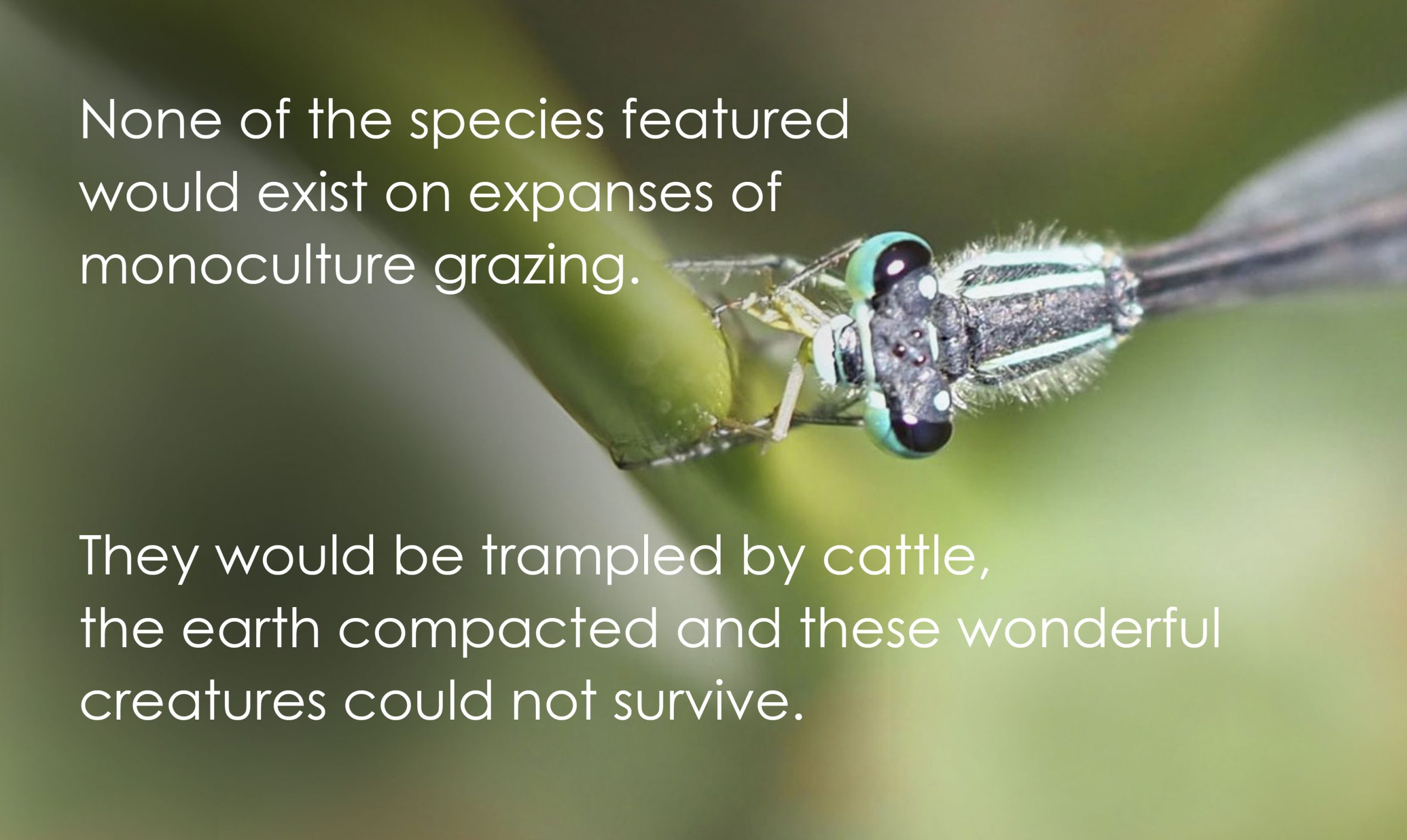
Over a long, very hot weekend in mid July, a large group of Vegan Land Movement volunteers visited all nine plots of VLM land removed from animal agriculture to record the 2026 Species Counts and to do a baseline species survey for Plot 9.
We are excited to finally share these with you after many, many hours of collating photographs and records, painstakingly identifying species, and then putting the data together. We owe a big thank you once again to Steven and Jennifer for their huge part in this. We would also like to thank our amazing group of dedicated volunteers who with keen eyes and sharp focus cameras gently made their way over each site, recording anything they saw.
There were around 20 of us who travelled from plot to plot and once again, we were greeted with the sight of a multitude of species who had moved onto these previously monoculture grazing plots.
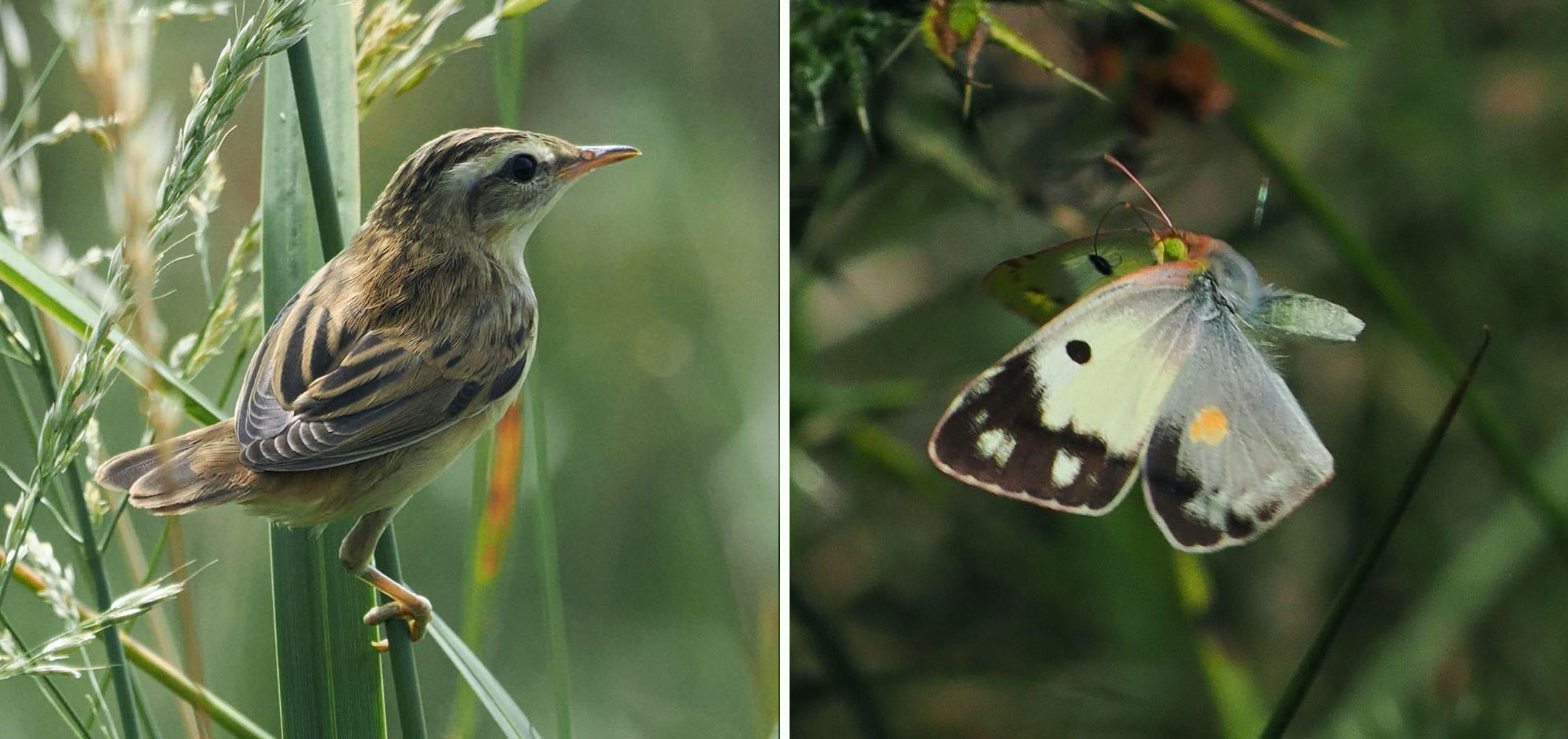
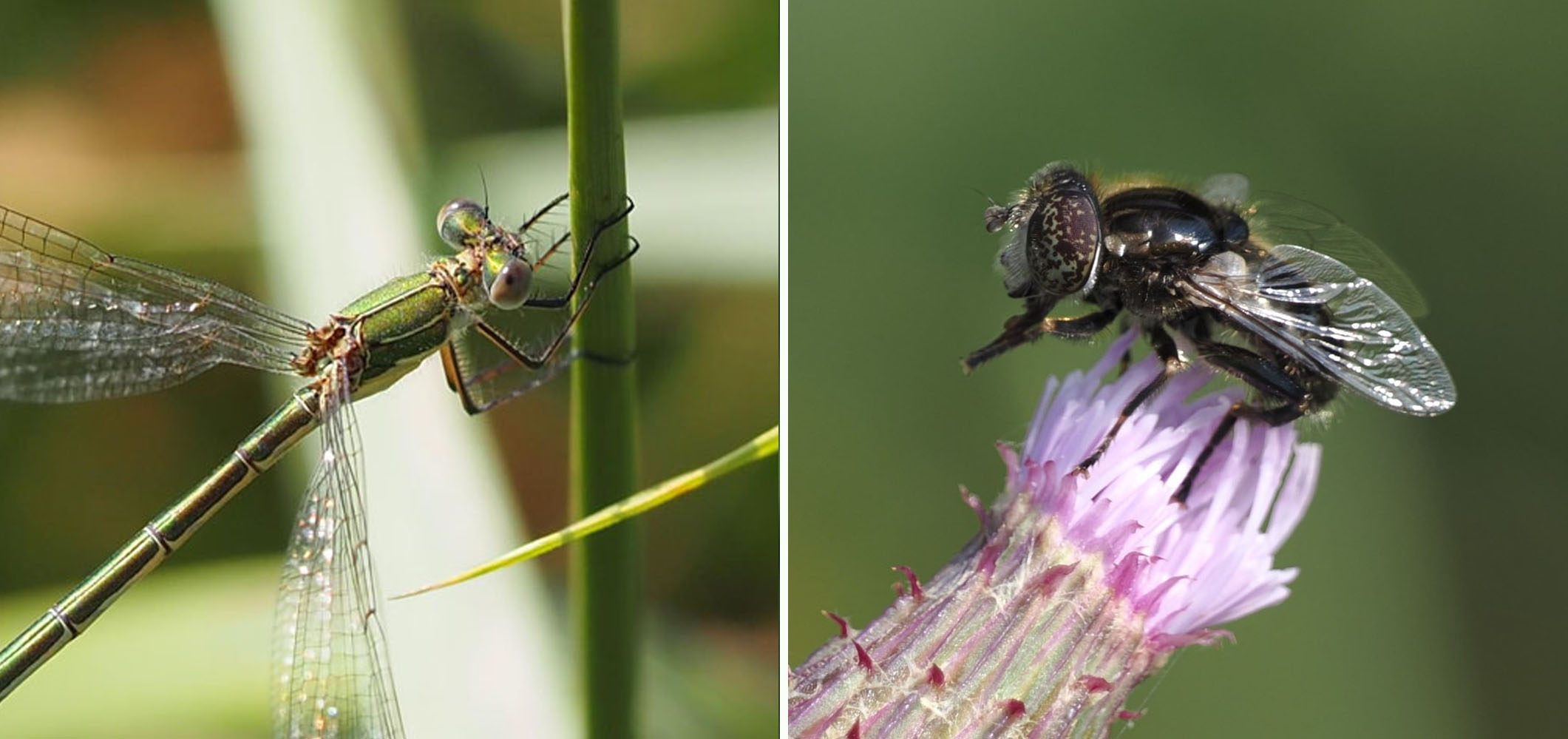
Take a look at these incredible images by Shane of a Sedge Warbler and a Clouded Yellow butterfly in flight and below that, an Emerald Damselfly taken by Frank and a Spotty Eyed Drone Fly, by Sylvie.
Sedge Warbler and Clouded Yellow Butterfly
Emerald Damselfly and Spotty Eyed Drone fly
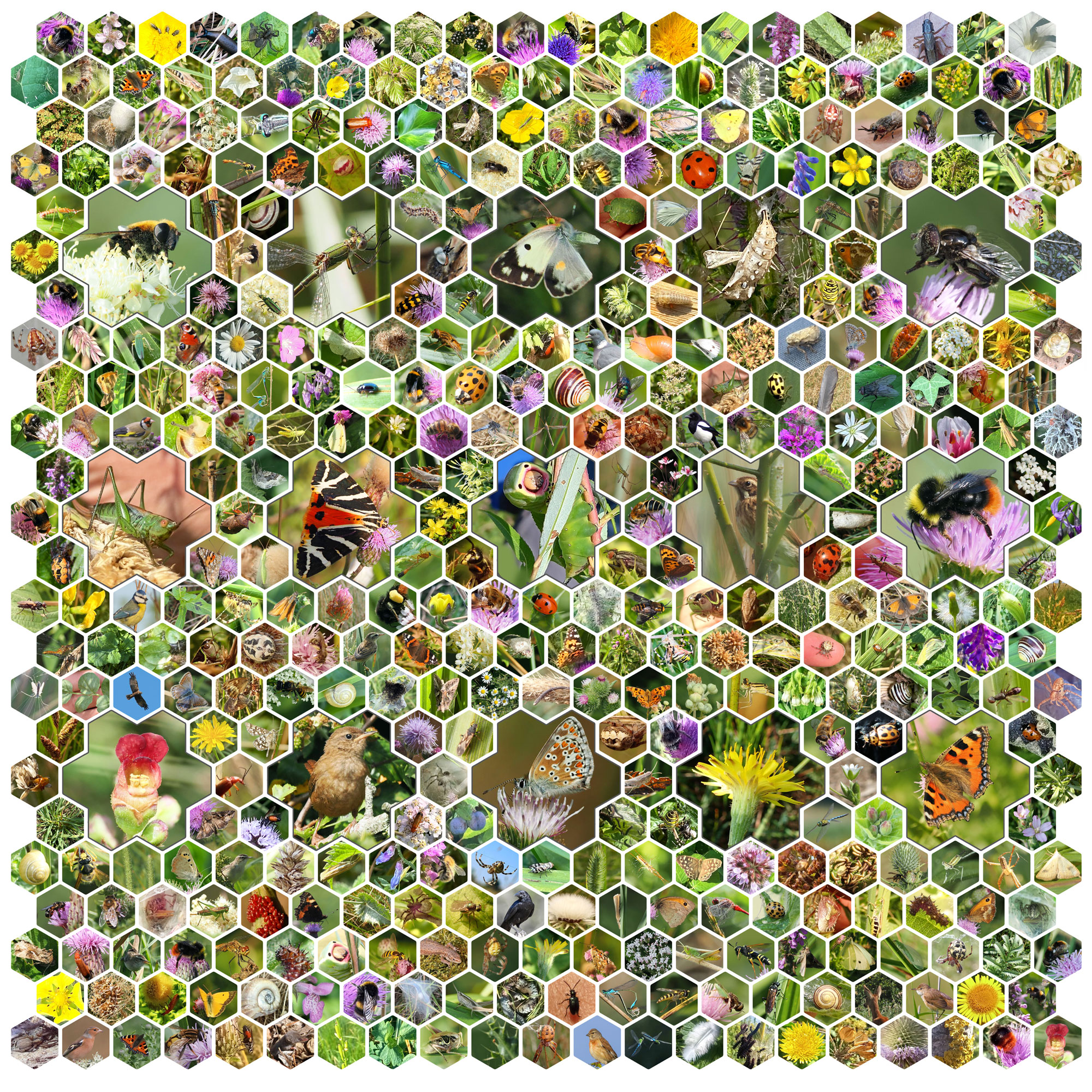
It was fantastic to see that there had been so much growth on the land since last year,especially on Plots 6 and 8. We witnessed and recorded an abundance of life during the four wonderful, but challenging days, in extreme temperatures. Below is a collage of all of the life we photographed and identified through various markings, sound recordings and droppings. Zoom in and get immersed in beautiful nature.
Important note: We were incredibly careful and carried out these counts with respect and sensitivity.
When we saw certain species we promptly moved away from them and did not return to where they were sighted. This species survey was undertaken gently and without harm, other than the moving of foliage where necessary to carefully access areas.
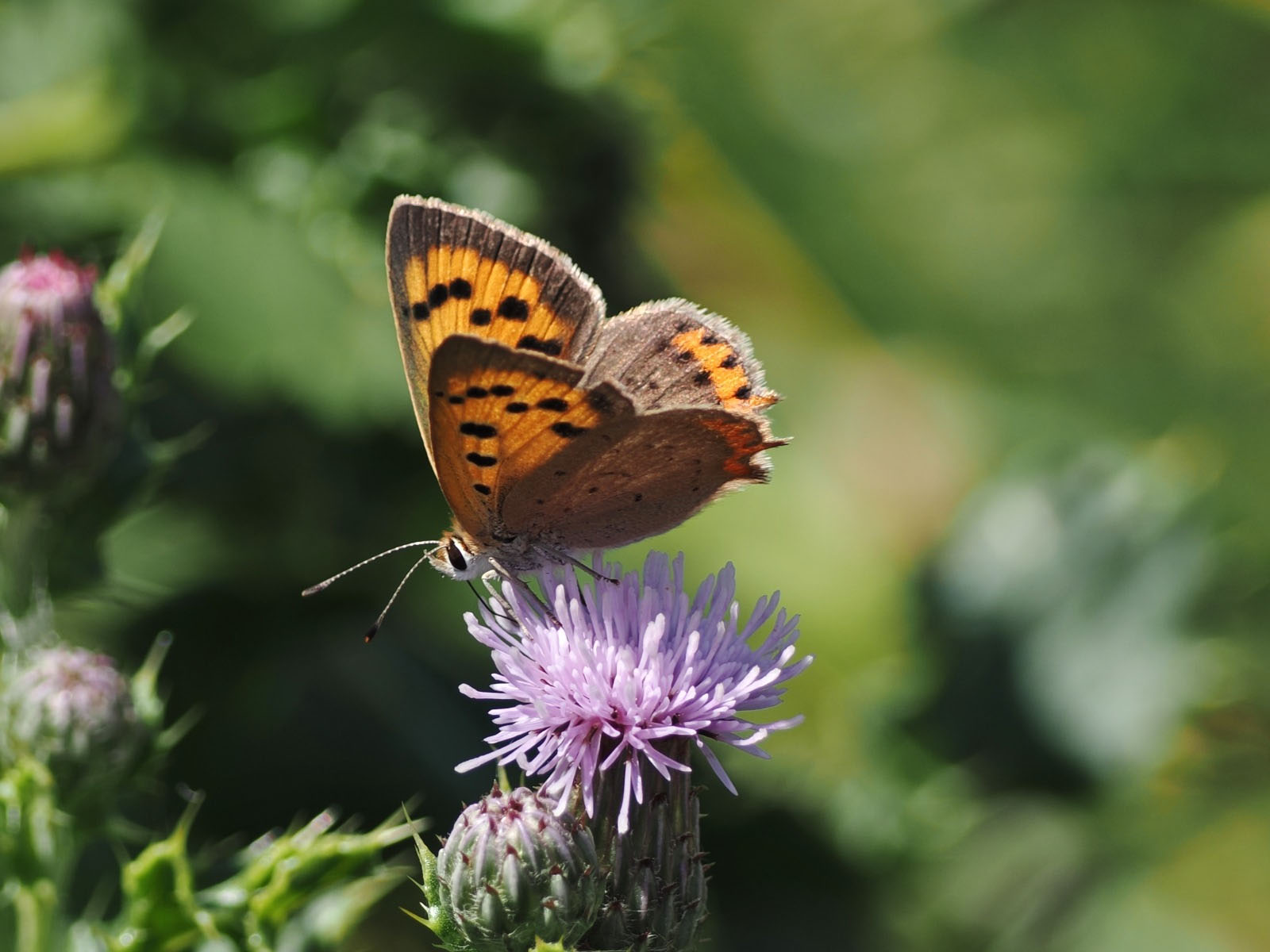
Small Copper by Sylvie
Overall, we recorded an incredible 236 animal species and 223 plant species including:
9 mammal species
161 insect species
41 bird species
8 mollusc species
14 arachnid (spider) species
2 reptile species
This translates to an overall approximate increase of 11.9% in fauna species since last year. There was also an increase of 16.8% in flora species since 2025 despite the extended heatwave and drought.
(The only plot that seemed to be struggling in the drought conditions however, was Plot 3, which has clay soil and had become very parched in places.)
The numbers recorded are just a selection of the species that have colonised these parcels of land removed from dairy grazing, species that the VLM volunteers observed, photographed and successfully identified. There are of course hundreds, if not thousands of others that would have been hidden, out of sight, or nocturnal or too small to see with the naked eye.
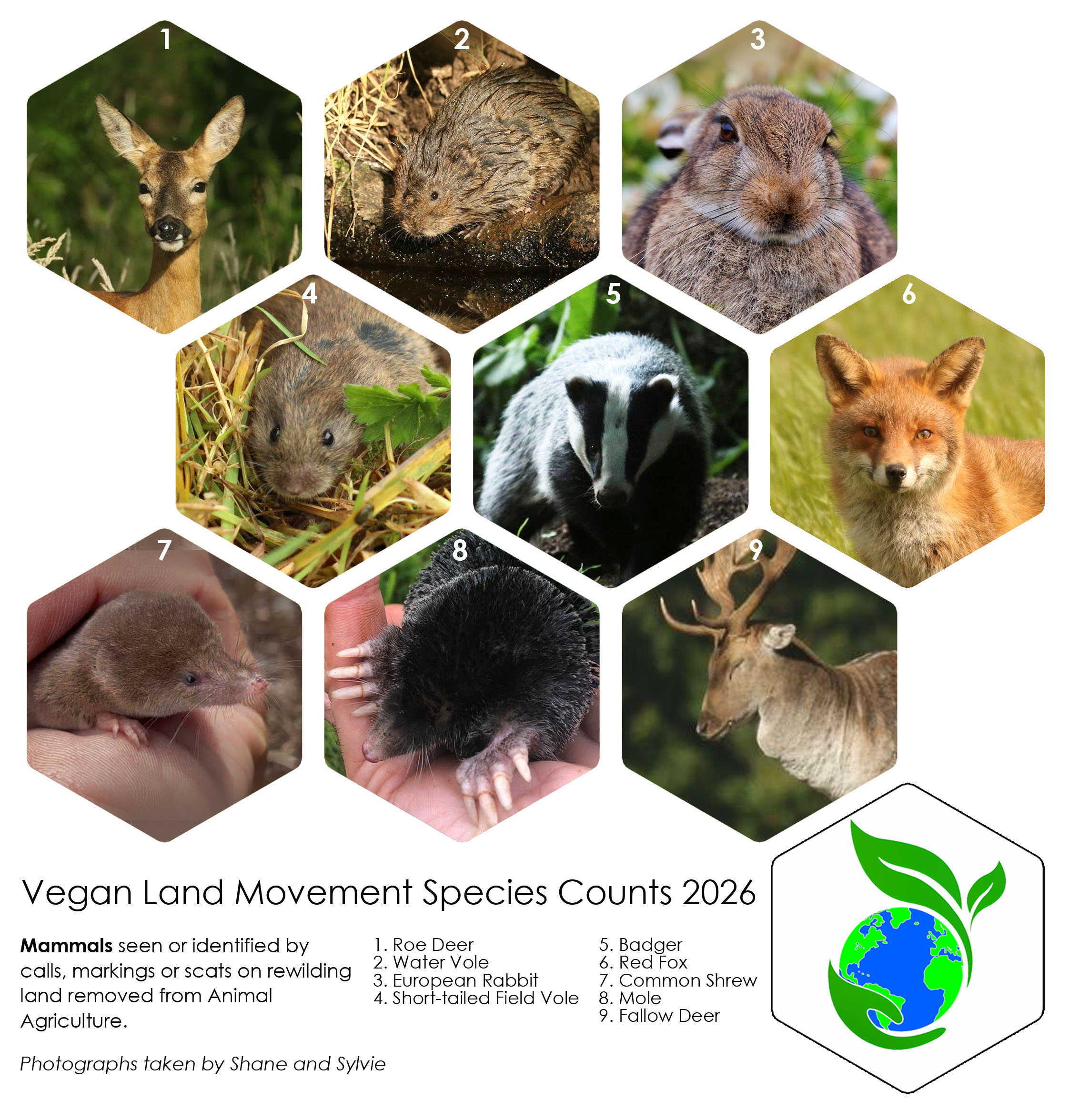
Mammals
We witnessed less mammal activity this year and saw fewer deer species. This was mainly due to the drought conditions and extreme heat as most mammals will take to shade in such extremes.
We did, however, record four new species in this survey – a Common Shrew, a Short-tailed Field Vole, a Eurasian Rabbit and the elusive Water Vole.
Several badger latrines and snuffle holes were also discovered again on plot 6, plot 7 and now on plot 8, alongside foraging pathways, runs and tunnels through longgrasses.
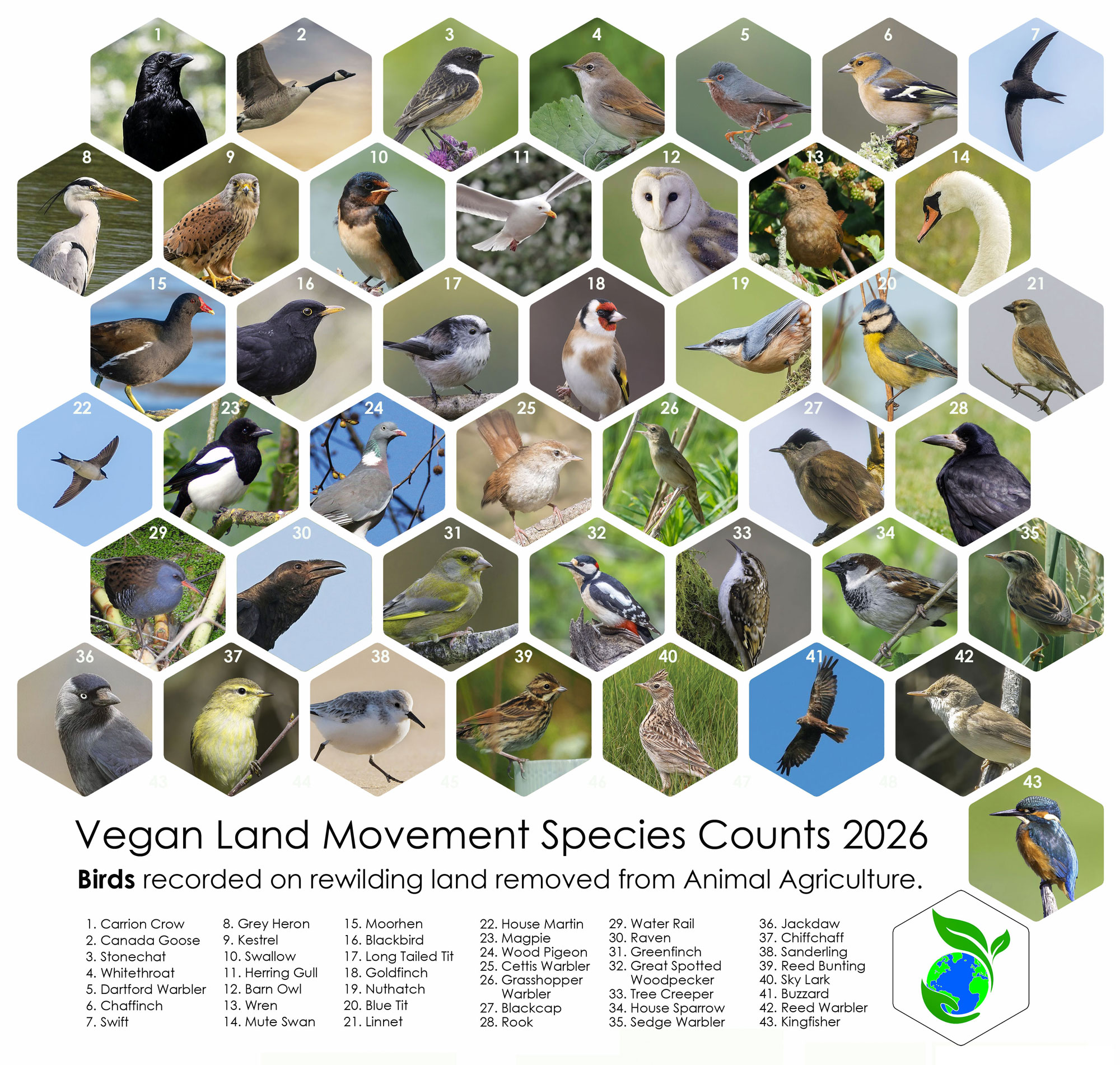
Birds
Below are the birds seen or heard and identified by knowledgeable local volunteersand keen birders. Many of these species were also verified by volunteers using the Merlin bird song recording app.
Birds recorded over all 9 plots. Photos by Shane and Sylvie and free images from Wikimedia Commons
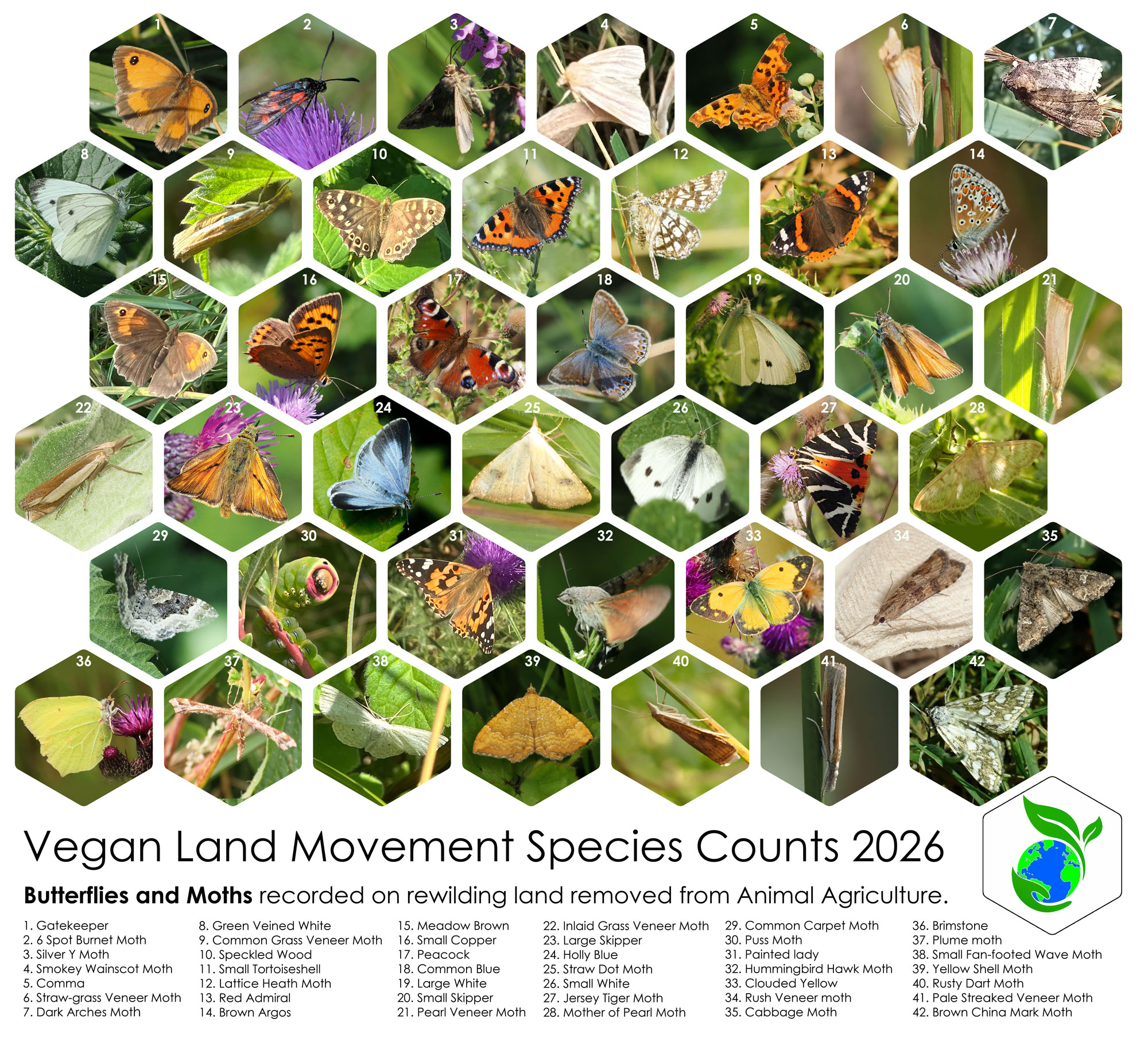
Butterflies and Moths
We saw many more butterflies and moth species this year. Below is a selection of the butterflies and a few of the moths photographed and recorded.
Butterflies and moths photographed by volunteers over all 9 plots.
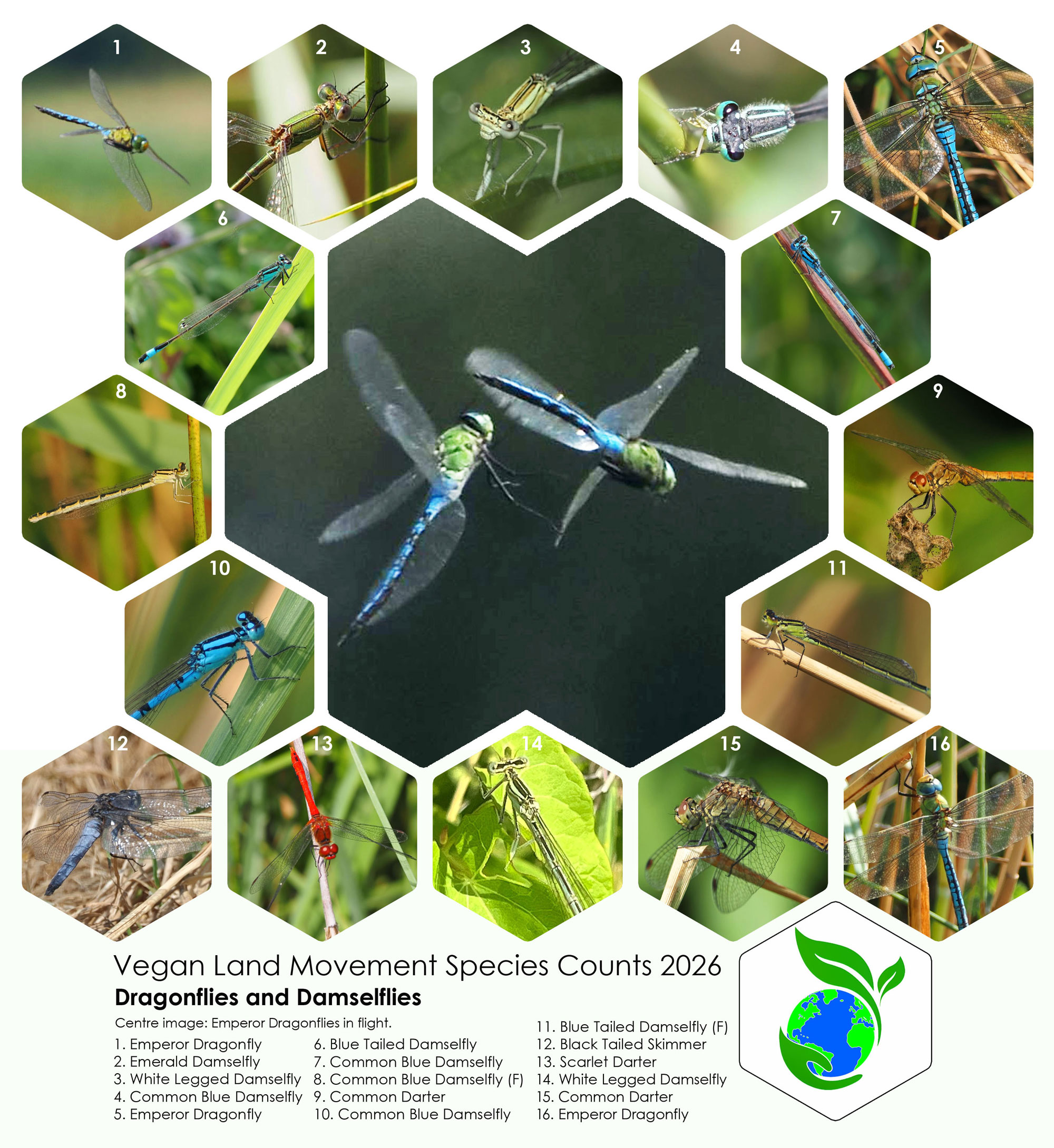
Dragons and Damsels
This year we have also highlighted certain species. Damselflies and dragonflies had greatly increased and there were some beautiful surprises as you will see below.
Damselflies and Dragonflies photographed over all 9 plots.
Going batty..
On one of the evenings, at dusk, we met with several local wildlife experts to undertake a bat survey on Plot 8. Sadly we were not able to record any bats until we had left the plot and were on the long walk back to the parking area, when we did then pick up some bat activity on the bat detector. These devices pick up the high-frequency echo location calls that bats emit. Bats generally call at ultrasonic frequencies ranging from about 12 kHz to over 120 kHz, which is far beyond the limit of human hearing. A bat detector uses a specialized ultrasonic microphone to capture these high frequencies and convert them into sounds.
Although we did not record bats on Plot 8 that evening, we did see barn owls hunting which was a wonderful sight and they seemed to be circling this plot. This is likely because it has become so much more abundant in species since last year. (We certainly experienced a large number of midges who honed in on us for the duration of the survey!)
Now for a special treat!
The trees on plot 6 have all grown well, especially the willows. Our intention is to plant trees that will attract and help increase species numbers, bringing new species into these areas. So, when we see this happen, it means what we are doing is actually working.
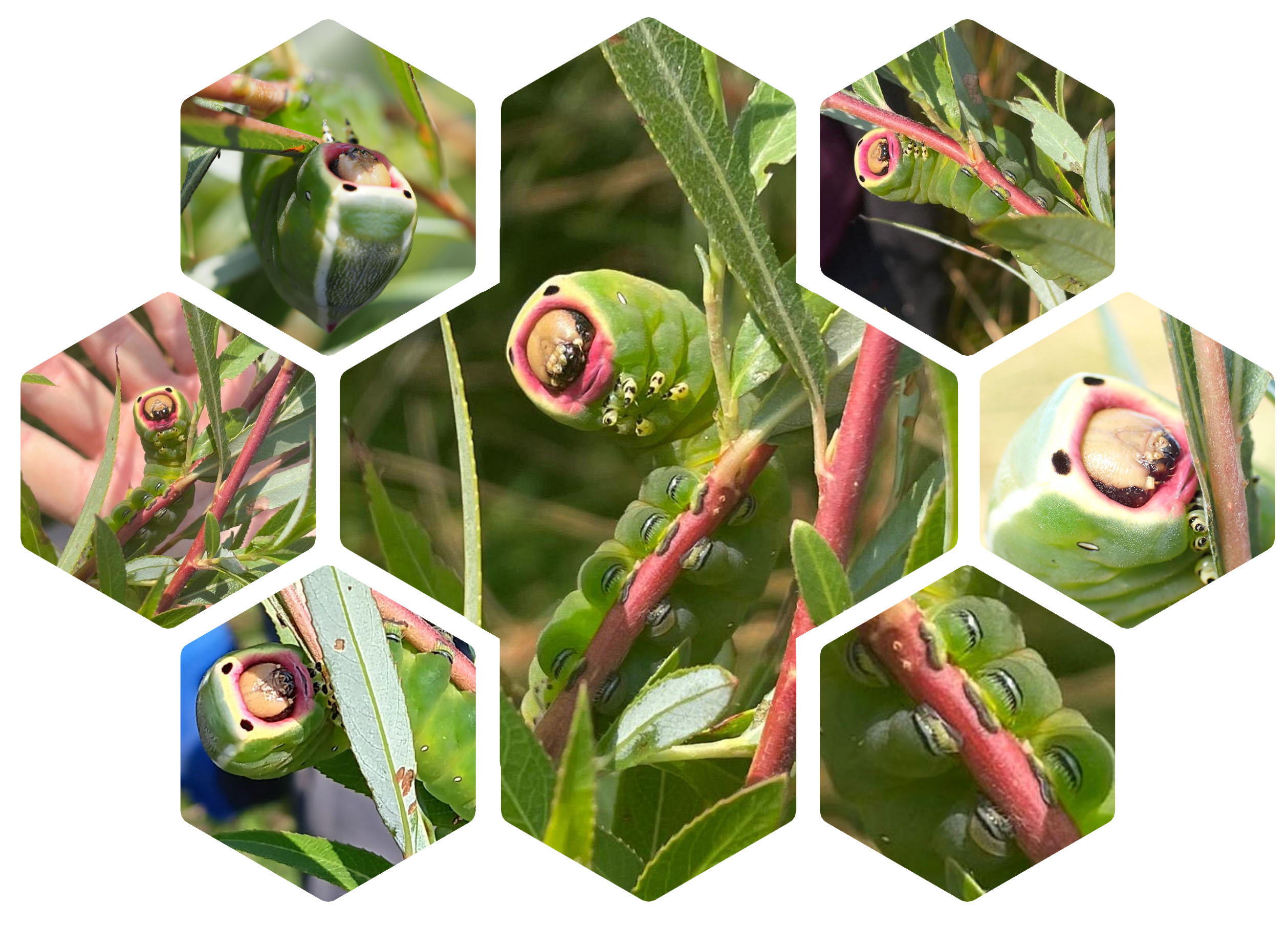
Below is a beautiful Puss Moth caterpillar discovered by Karl on one of the willows that we planted on plot 6.
Photographs by volunteers
The Puss Moth caterpillar is a fantastic example of mimicry – an adaptation where a harmless animal evolves to look like a dangerous or scary animal. The puss moth caterpillar uses a mimicry fake ‘face’ and has a spikey tail to trick and scare away predators. When attacked, the tail flicks out small red spikes and the head rears back to reveal fake scary eyes. You can read more about this wonderful moth below and also watch this incredible video showing the egg hatching to adulthood.
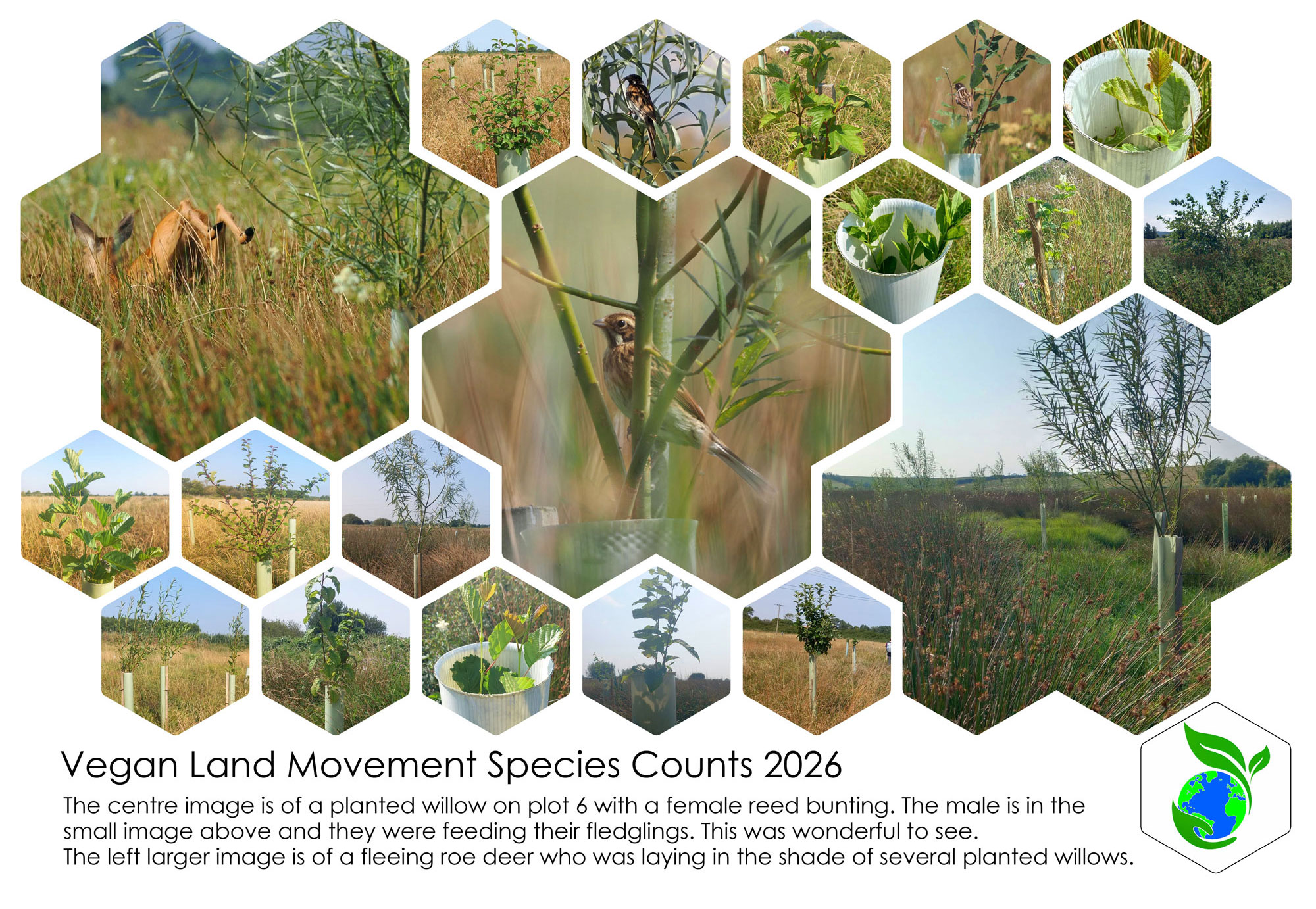
As well as the Puss Moth caterpillar, a pair of Reed buntings were also seen in some of the willow trees, feeding their fledglings, as shown in the trees image below:
Trees
Lots of the native trees we have planted are growing well, especially alder, willow and birch. Below is a collage of some of these trees on plots 2, 4, 5 and 6. Plot 6 has actually started to feel like a woodland.
Planted native trees
Last, but not least
We’d like to share some rare finds spotted this year.
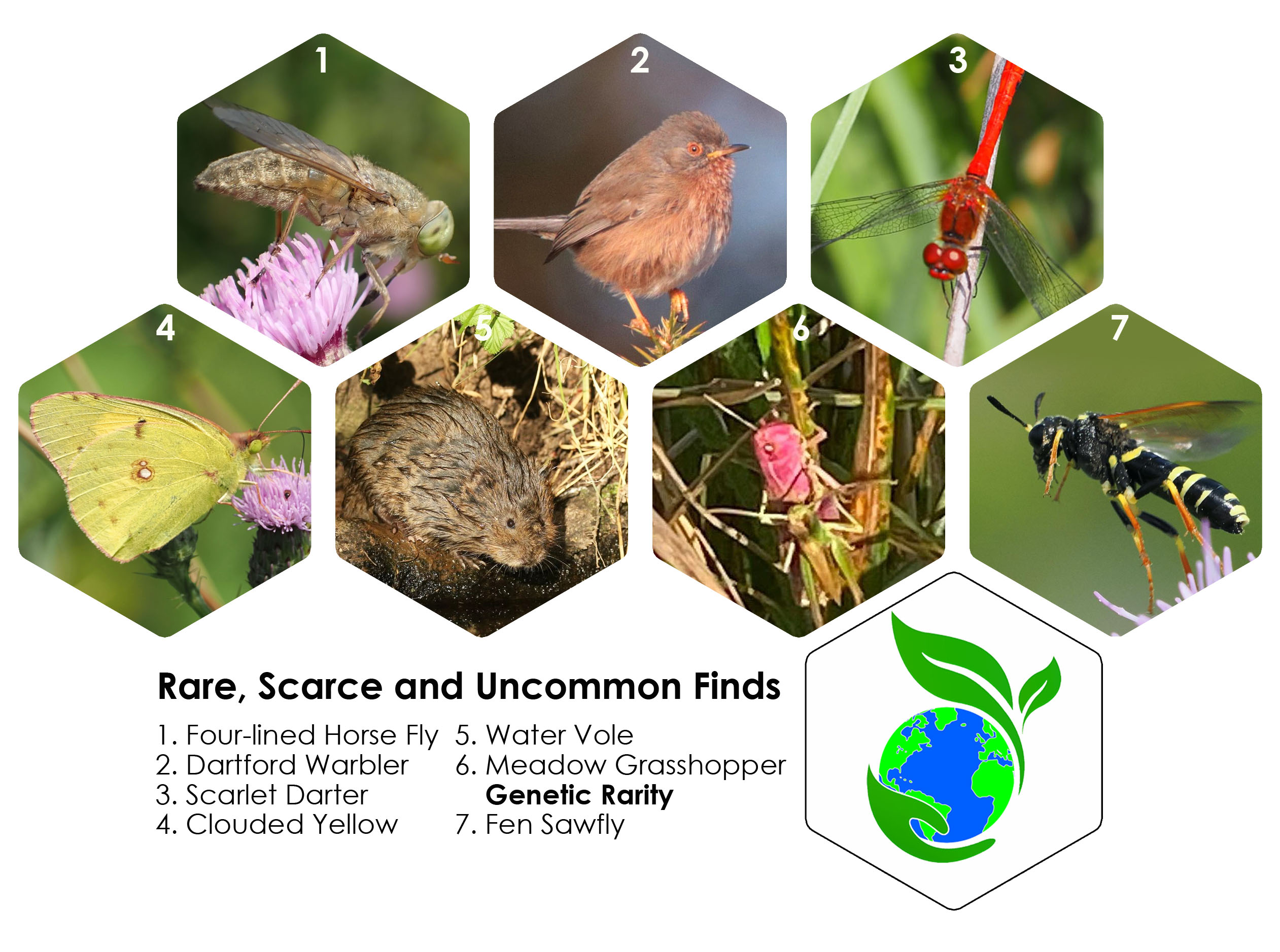
Below is a collage of 7 uncommon, scarce and rare discoveries on the VLM plots.
Rare, scarce and uncommon finds photographed by Shane, Sylvie, Frank and Ian (pink grasshopper).
It is wonderful to have a group of creatures who are scarce, uncommon and rare finding homes on VLM land. Hearing the song of a Dartford Warbler was fantastic, as they are on the Amber Species List (medium conservation concern.) You may know that a massive wildfire in July 2026 destroyed about 150 hectares (370 acres) of rare coastal heathland at Dunwich Heath and neighbouring RSPB Minsmere in Suffolk, which severely impacted key breeding and feeding habitats for the Dartford warbler.
We knew that Water Voles were in the overgrown ditches around the VLM land as we had seen their tunnels and markings but this year we heard their distinctive sounds as they jumped into the water. Water Voles are rare and officially listed as an endangered species across Great Britain.
The Fen Sawfly (Tenthredo omissa) is a specialised insect primarily found in wetland and fen habitats. Because these specific marshy ecosystems have faced significant loss and fragmentation, the species is considered quite rare and localized.
The Four-lined Horsefly (Atylotus rusticus) is very rare and uncommon in Britain, holding a Red Data Book (RDB1) conservation status.
Scarlet Darter (Crocothemis erythraea) dragonflies are very rare in the UK, classified as an uncommon migrant or vagrant.
Clouded Yellow (Colias croceus) butterflies are regular visitors to the UK in small numbers most years, but they are considered unpredictable and uncommon.
The rarest find this year was a genetic mutation known as Erythrism of a meadow grasshopper. She was pink!! Seeing a pink grasshopper is extremely rare. Experts estimate that roughly 1 in 500,000 grasshoppers is born with this trait, and people have only about a 1% chance of spotting one in their entire lifetime. Look out for our next feature about this special rare find on VLM land.
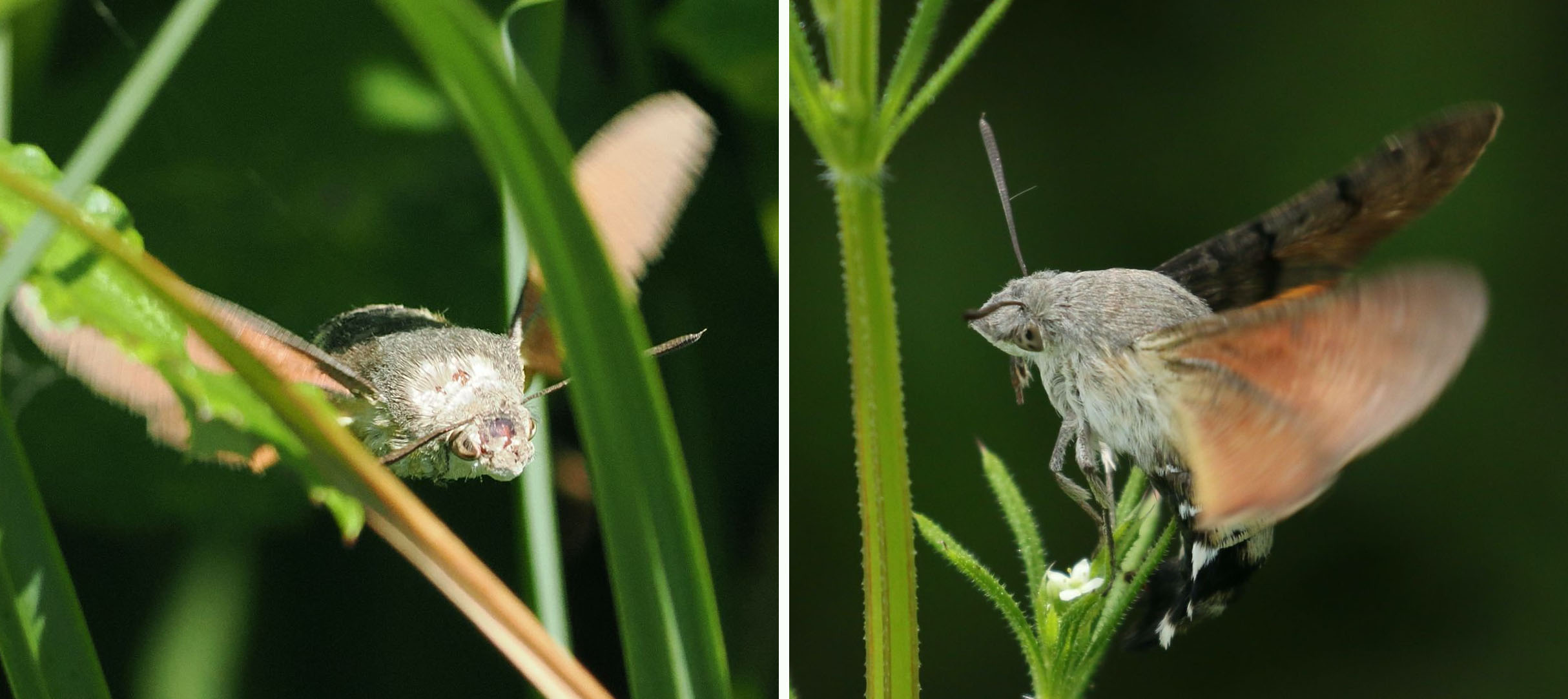
Is it a bird or a moth?
Finally, it was an absolute delight to see a Hummingbird Hawkmoth on Plot 8, darting in and out of cleavers plants, which is a food source for their caterpillars.
The species numbers recorded are just a selection and snapshot of the species that have colonised these parcels of land removed from dairy grazing – species that the VLM volunteers observed, photographed and successfully identified. There are of course hundreds, if not thousands of others that would have been hidden, out of sight, nocturnal or too small to see with the naked eye. As outlined earlier, because of the intensive heatwave that we were experiencing in July we saw fewer birds and mammals this time. Because of the heat, we decided to start the surveys much earlier in the mornings than in previous years, as by mid-afternoon it was far too hot – for species to be seen, and for volunteers!
We need to keep on creating these nature havens all over the country, to help species in decline and to mitigate against the effects of the climate crisis and ecological andbiodiversity crisis.
If you would like to help us with this mission and find out more information about becoming a member of the Vegan Land Movement and donating monthly to help save lives, wildlife and help the planet, please click the link below:
We are very grateful to the brilliant volunteers who gave up their time to help with the Species Counts and all the people from around the world who have donated to save these plots of land from harm. These are the results of collective action.
The VLM is all of us working together to make a real difference. We are saving so many lives by removing the land from animal agriculture and giving it back to struggling wildlife.
If you would like to join us in this mission to help save lives, help wildlife and the planet, become a member of the Vegan Land Movement by donating monthly or donate to the latest animal agriculture buyout by clicking on the links below: